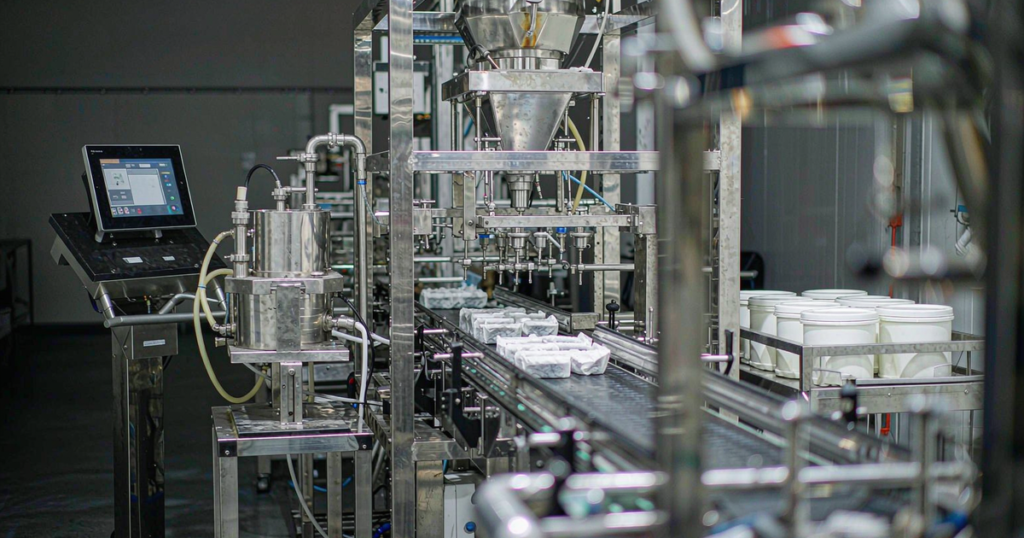
A nicotine pouch machine specified for the US market today has to hold dosing within ±0.5–1% on portions of 0.4–1.0 g, and two regulatory events in the last five weeks changed what that tolerance is actually protecting you from. On 28 September 2026 FDA said it intends to start rulemaking to replace the 2021 PMTA rule; on 6 October 2026 eight EU member states asked the European Commission for nicotine caps, a flavour ban and a market freeze on new products. Also called a pouch filling machine, a pouch making machine or an oral pouch machine, this equipment forms, doses and seals non-woven pouches at 200–1,200 pouches per minute (ppm). The machinery implication is narrow but concrete: the unit your regulator writes the cap in — mg per pouch or mg per gram — decides whether you need weigher-grade dosing or whether an auger filler will clear the bar.
What happened in October 2026, in five dated lines
- 28 September 2026 — FDA announced it will evaluate replacing the 2021 PMTA framework through new rulemaking. No proposal text, no timeline. It reaffirmed the statutory “appropriate for the protection of the public health” standard and the 180-day review clock, both of which are set by law and cannot be changed by a new rule.
- 1 October 2026 — Skoka Inc. submitted a bundled PMTA covering 55 nicotine pouch products across 11 varieties and five strengths, after raising USD 21.5 million, with USD 15 million committed to the regulatory programme (pharmacokinetic studies, toxicology, stability testing, actual-use research, label-comprehension studies). US retail distribution is planned for 2027 subject to authorisation.
- 6 October 2026 — health ministers from the Netherlands, Belgium, Finland, France, Hungary, Latvia, Slovenia and Spain wrote to the EU Health Commissioner asking for a market freeze on new nicotine products, maximum nicotine content limits, standardised and plain packaging, an EU-wide flavour ban and an end to cross-border distance sales.
- 9 October 2026 — 31 ZYN products held FDA marketing granted orders: 20 flagship SKUs authorised in January 2025 plus 11 ZYN ULTRA SKUs authorised in August 2026 (ten at 9 mg and one at 11 mg). FDA has now authorised 43 nicotine pouch products in total, 23 of them through its pouch pilot programme.
- 13 October 2026 — Philip Morris International presented ZYN and IQOS at the NACS Show in Las Vegas alongside roughly USD 1.2 billion of planned US capital expenditure for 2024–2028, including the new Aurora, Colorado facility.
None of this is yet law in the EU. The letter is a political position, not a directive, and the Commission’s proposal is expected before the end of 2026. But equipment decisions made in the next two quarters will be judged against whatever arrives, and a multi-lane pouch packing machine has a service life measured in ten-year blocks.
Why mg per pouch and mg per gram are two different machine specs
The conversion is simple and it is the whole problem: mg per pouch = concentration (mg/g) × filled mass of one pouch (g). At 12 mg/g, a 0.5 g mini pouch delivers 6 mg per pouch; a 0.8 g pouch of the identical blend delivers 9.6 mg. Nothing about the blend changed — only the fill weight.
| Pouch format | Fill weight | At 8 mg/g | At 16 mg/g | At 20 mg/g |
|---|---|---|---|---|
| Mini | 0.4–0.5 g | 3.2–4.0 mg | 6.4–8.0 mg | 8.0–10.0 mg |
| Slim / Regular | 0.65–0.75 g | 5.2–6.0 mg | 10.4–12.0 mg | 13.0–15.0 mg |
| Large | ~1.0 g | 8.0 mg | 16.0 mg | 20.0 mg |
That table is why the unit matters commercially, not just legally. A multi-lane nicotine pouch packaging machine controls fill weight, not concentration. Your blender controls concentration. Regulators test the finished pouch and usually work backwards.
Which markets cap by pouch and which cap by gram
As compiled from national sources in October 2026, the existing caps already split along exactly this line.
| Market | Limit | Unit | What it punishes |
|---|---|---|---|
| Denmark | 9 mg | per pouch | Overfilled heavy portions |
| Czechia | 12 mg / 240 mg | per pouch / per can | Fill-weight drift and count errors |
| Italy | 16.6 mg | per pouch | Tail-end high fillers in a batch |
| Hungary | 17 mg | per pouch | Tail-end high fillers in a batch |
| Finland | 16.6 mg | per gram | Over-concentrated blend |
| Latvia | 4 mg | per gram | Over-concentrated blend |
| Poland | 20 mg | per gram | Over-concentrated blend |
| Luxembourg | 0.048 mg | per pouch | Effectively removes the category |
| Belgium, France, Germany, Netherlands, Norway | Banned | — | Not a spec question |
A secondary note for searchers: if you got here typing Zyn pouch machine, snus machine or white snus machine, those all point to the same class of equipment. In the US the correct term is nicotine pouch or tobacco-free nicotine pouch (TFNP); snus in American usage means a product that contains tobacco leaf, and EU-wide tobacco snus is banned outside Sweden. In the UK and EU the compliant wording is tobacco-free or modern oral; in Sweden the word people actually use is portion. VELO explicitly states it is not snus, and the FDA-authorized list today covers ZYN SKUs plus 12 on! PLUS SKUs authorised in December 2025, while VELO and Rogue remain in PMTA-pending status.
What each cap unit demands from the dosing system
| Requirement | Cap written in mg per pouch | Cap written in mg per gram |
|---|---|---|
| Primary control | Fill weight per portion | Blend concentration |
| Typical dosing accuracy needed | ±0.5% (multi-head weigher class) | ±1–2% acceptable if mix is uniform |
| Critical evidence | Checkweigher records, SPC charts, reject log | Batch CoA, blend uniformity study |
| Risk if ignored | Heavy tail of pouches breaches the cap | Batch recall, relabelling |
| Cost driver | Multi-head weigher, statistical software | Blending and sampling procedure |
Read across that table before you write an RFQ. A 0.5 g mini line running at 800 ppm produces 48,000 pouches an hour; at ±2% the population spread around target is wide enough that the upper tail pushes a fraction of pouches past a 9 mg cap even when the mean sits comfortably under it. Tightening to ±0.5% does not change your mean — it narrows the tail, and the tail is what the inspector buys off the shelf.
Boundary worth stating plainly: a multi-head weigher cannot rescue a badly blended batch. If nicotine is not uniformly distributed through the carrier, ±0.5% portion accuracy still delivers variable mg per pouch. Blend uniformity and portion weight are two separate controls and you pay for both.
Does a checkweigher solve this, or do I need batch traceability too?
You need both, and they answer different questions. A checkweigher proves what left the machine, pouch by pouch, at line speed. Batch traceability proves which blend lot, which non-woven roll lot and which operator made that portion, which is what a dossier or a recall demands. In practice the minimum defensible package for a regulated market looks like this:
- Multi-head weigher or servo auger dosing with documented accuracy at your actual target weight, not a catalogue figure.
- Inline checkweigher with a reject diverter and a retained SPC record per batch.
- Recipe storage on the PLC and HMI so each SKU carries its own target weight, tolerance band and sealing parameters.
- Batch genealogy from blend lot through to can code, retained for at least shelf life plus one year.
- Certificate of analysis per batch covering nicotine content in both mg per pouch and mg per gram, which costs you nothing extra to print and saves relabelling later.
Where you are doing white label or private label pouch manufacturing, that fifth line is a commercial argument as much as a compliance one: a brand owner who can file both numbers does not need to come back to you for another production run when the cap changes units.
What the PMTA rewrite does and does not change for equipment buyers
It changes almost nothing today, and it is worth being unsentimental about that. FDA has published no proposal, no content and no timetable. The current Part 1114 requirements remain in force. The 180-day review deadline and the public health standard are statutory. Press reports of simplified study requirements are, as of this writing, unconfirmed.
The practical read from the equipment side is about timing rather than content. As one recent example of the queue, Skoka filed a bundled application covering 55 products on 1 October 2026 and targets US retail in 2027. Against that clock, a machine lead time of 45–60 days, or 75–90 days for a turnkey line with can unscrambler, pouch-to-can loader, capper, checkweigher and cartoner, is noise. Do not delay a capital decision waiting for a rule that has no text yet. What you can do is spec headroom: buy the tighter dosing package now, because retrofitting a weigher onto a completed line is far more expensive than specifying it in the original PO.
Ultrasonic vs heat sealing: where this fits
The eight-country letter also asks for a flavour ban and standardised packaging, and that shifts the SKU mix rather than the hardware. If the portfolio narrows to tobacco and menthol for regulated markets while full-flavour SKUs continue for markets without caps, you run more SKUs per line and change over more often. Then the number that governs your output is no longer top speed but changeover time, which is why tool-free format change parts and stored recipes matter more than another 200 ppm you will rarely use.
Another boundary: ultrasonic sealing is not the right choice for heat-sealable laminate films — heat sealing gives higher throughput there. Ultrasonic earns its keep on low-gsm non-woven pouch fleece, where it bonds without scorching the material or cooking off volatiles in the blend.
What to put in your next RFQ
- Target portion weights per format (Mini 0.4–0.5 g, Slim 0.65–0.75 g, Large ~1.0 g) and the required dosing accuracy at each.
- The cap unit your destination market writes its limit in, stated explicitly as mg per pouch or mg per gram.
- Lanes and target output in ppm, plus canning rate in cans per minute (typically 50–60) and pouches per can (20–25).
- Sealing method and non-woven specification, including seal width and jaw temperature range.
- Changeover time target between formats and whether tool-free change parts are included.
- Traceability scope: batch genealogy, recipe storage count, retained records period.
- Inspection package: checkweigher, metal detector, vision inspection.
- Compliance documentation: CE declaration, material contact certificates, IQ/OQ/PQ support, cleaning validation.
- Utilities confirmed before FAT: typically 380 V three-phase plus compressed air at 0.6 MPa, 300–600 L/min.
Where this does not apply
If you ship to a single market with no cap, specifying for the tighter unit is money you will not recover. And if your destination bans the category outright — Belgium, France, Germany, the Netherlands and Norway do today — the correct answer is not a better dosing system, it is a different product route such as a nicotine-free caffeine pouch validated under food supplement rules, which changes the machine less than it changes your paperwork: Germany alone has treated tobacco-free pouches as an unauthorised novel food, and Bavaria’s food safety office found breaches in all 18 nicotine-free pouches it tested through November 2025.
Next step
Equipment lead time is 45–60 days and a full line is 75–90 days. A regulatory change will take years to reach shelves. Sequence your capital against the second number, not the first. Send us your destination markets, target formats in grams and target output in ppm and we will return a line configuration with the dosing class matched to the cap unit your regulator actually uses. Contact our engineering team with that information, or read more about PouchMfg and how we build pouch lines for regulated markets.