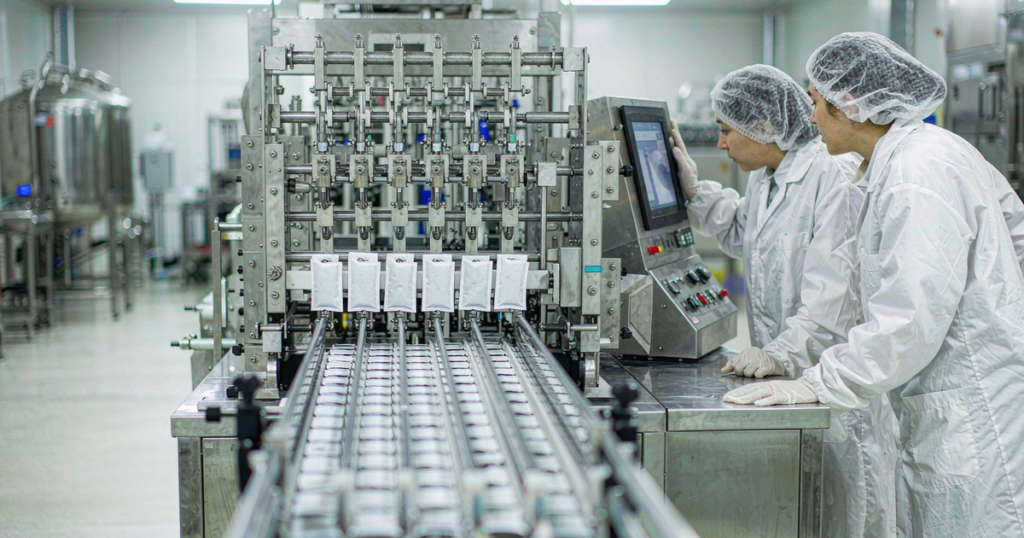
Most crews can run a new nicotine pouch packing machine independently within two weeks and reach near-target output within 30 days — but only with a structured training plan. Left to figure the machine out on their own, operators typically settle at 60–70% of rated speed. On a 6-lane line rated 400 ppm, that means leaving roughly 120–160 pouches per minute on the table. Also called a pouch filling machine, an oral pouch machine or a multi-lane pouch packing machine, this equipment is easy to start and easy to run badly: pouch weight drifts toward the 0.65–0.75 g limit, seals fail intermittently, and GMP records fall apart at every shift change. Below is the 30-day ramp plan we hand to buyers after installation and commissioning.
How Long Does Operator Training on a Nicotine Pouch Machine Actually Take?
Industry experience across automated packaging lines is consistent: a basic operator is competent in 1–3 days, an advanced operator who handles changeovers and first-line troubleshooting needs 1–2 weeks of live production, and a trainer-level operator needs 6–12 months. For a new nicotine pouch line, factory commissioning training usually runs 3–10 days; the rest of the ramp happens in your plant, on your product. Plan the ramp in five phases, each with a sign-off gate — time in the seat is not the goal, passing the gate is.
| Phase | Focus | Typical duration | Sign-off gate |
|---|---|---|---|
| 1 | Safety, interlocks, E-stop, HMI layout, recipe storage | Day 1 | Starts and stops the machine safely without prompting |
| 2 | Startup, shutdown, cleaning, daily inspection points | Days 1–2 | Completes a full production cycle unaided |
| 3 | Recipe selection, dosing targets, alarm handling | Days 2–5 | Clears the 10 most common alarms and states the cause |
| 4 | Independent running under supervision | Week 1 | 2-hour run with no operator intervention |
| 5 | Changeovers, optimization, train-the-trainer | Weeks 2–4 and beyond | Format changeover completed in under 15–20 minutes |
Train by role, not by crowd: basic operators need phases 1–4, one or two senior operators go deeper (phases 5 and beyond), and maintenance staff need separate training on sensors, servo drives and fault diagnosis. A train-the-trainer model — where two key operators are trained to depth and then coach the rest — keeps knowledge alive after the supplier’s engineer flies home.
When Does First Article Approval Happen on a New Pouch Line?
First article approval is the bridge between commissioning and routine production, and it happens at the start of every shift’s first run — not once. The standard routine: run 25–50 pouches at reduced speed, then check them before any ramp-up. On a slim-format product the checks are pouch weight (0.65–0.75 g target, confirmed on a calibrated scale), seal integrity (no leaks, no burns, no wrinkles at the 5–6 mm seal width), pouch dimensions, and print or registration if the film is printed. Quality signs off the first article, and only then does the line ramp to full speed in steps. Skipping this gate is how a whole shift produces out-of-spec pouches before anyone notices.
How Do You Run a GMP-Compliant Shift Handover on a Pouch Line?
If you run two or three shifts, the handover is where GMP discipline is won or lost. US regulation 21 CFR Part 211.100 requires written procedures and documented deviations, and EU GMP Chapter 1 requires continuity of responsibility between shifts — auditors on both sides of the Atlantic review shift handover records. A compliant handover log for a nicotine pouch line captures six items:
- Current SKU, batch number and pouches/cans produced versus plan
- Machine status per lane: running, idle, under maintenance
- Deviations and alarms from the outgoing shift, with corrective actions taken
- Cleaning status: cleaned, part-cleaned, or not required
- Material status: non-woven roll and lid stock remaining, next lot numbers
- Special precautions for the incoming shift, signed by both shift leads
Nicotine products add a compliance layer: if your facility is FDA-registered and products are on a PMTA pathway, handover records become part of your batch documentation. Train operators to treat the log as a legal record, not a scrap of paper at the end of a shift.
What Output Should a New Line Hit in Weeks 1–4?
Measure the ramp with OEE (Overall Equipment Effectiveness = Availability × Performance × Quality) and with percentage of rated speed. Untrained crews typically sit at 60–70% of rated speed; manual lines run 40–60% OEE while well-run automated lines reach 70–85%. A realistic 30-day ramp for a multi-lane nicotine pouch machine looks like this:
| Week | % of rated speed | Typical OEE | Gate to pass |
|---|---|---|---|
| Week 1 | 50–60% | 35–45% | First article approved every shift, log complete |
| Week 2 | 65–75% | 50–60% | One changeover without engineer support |
| Week 3 | 75–85% | 60–70% | Dosing at ±1% or better across a full shift |
| Week 4 | 85–95% | 70–80% | Two consecutive shifts at target with no quality escapes |
One boundary worth stating plainly: this 30-day ramp plan is not the right tool for a line that has already run a validated campaign. For re-commissioning after a shutdown or a seasonal gap, a 1–2 day refresher covering startup, alarms and cleaning is enough — full retraining at that point wastes production time and signals a training design problem, not an operator problem.
What Are the Warning Signs That Training Has Failed?
Long ramp times are usually a training design problem, not a hiring problem. Watch for these failure patterns in the first month:
- Operators still call a supervisor for basic startup after several days
- Repeated errors during routine changeovers, timed well above the 15–20 minute target
- Alarms reset without the operator understanding the cause
- Pouch quality differs noticeably between shifts on the same recipe
- Cleaning steps skipped or done out of sequence
- Operators avoid touching settings out of fear of breaking something
The fixes are unglamorous and cheap: written SOPs with photos, laminated parameter cards at the station, short videos for multilingual crews, and role-specific sign-off sheets. Modern PLC + HMI controls with recipe storage and guided alarms shorten training measurably — when comparing machines, ask how the HMI supports a new operator, not just what the top speed is.
How Many Operators Does a Multi-Lane Pouch Line Need Per Shift?
A fully integrated nicotine pouch production line — forming, dosing, sealing, checkweigher, metal detector, can unscrambler, pouch-to-can loading and capping — runs with 1–2 operators per shift plus one line leader, compared with the 8–12 workers an equivalent manual operation needs. The common staffing mistake is under-investing in the line leader role: this is the person who owns changeovers, first article sign-off and the handover log, and they are the one who decides whether week 4 looks like 85% of rated speed or 65%.
What Should You Ask a Machine Supplier About Training?
Before you sign, put training in the contract: number of training days included with installation, whether training happens on your product or demo material, what written SOPs and alarm guides are delivered, and whether a refresher visit is included after 60–90 days of production. If a supplier treats training as a half-day walkthrough, expect the 60–70% speed problem to visit your plant. To review how commissioning, acceptance testing and training fit together on the full project timeline, read our nicotine pouch packaging machine overview, or OEM pouch manufacturing if you are scaling a brand. You can also contact our engineering team for a training plan tailored to your shift pattern, or read more about PouchMfg to see how we support buyers after installation.