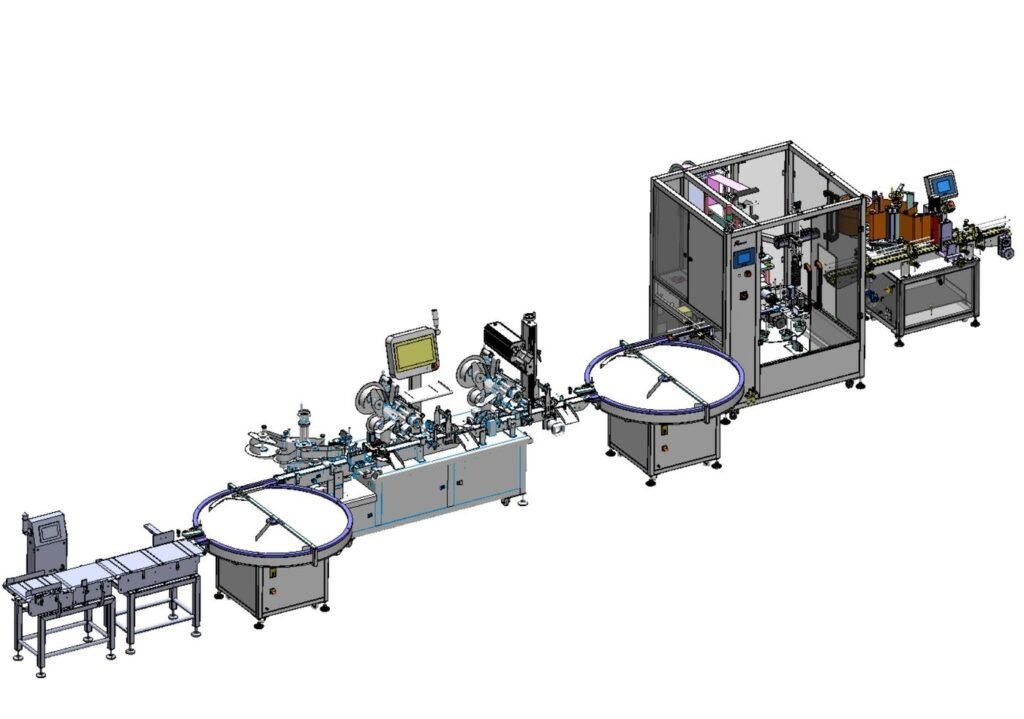
A custom oral pouch packaging line is only as good as the brief you give the builder. The more precise your specification, the faster the sampling and the fewer surprises at commissioning. Here is the checklist our engineering team uses to turn a request into a running line.
1. Bag dimensions and shape
Give real millimetres: width, length, and whether the pouch is rectangular, pillow, or a custom profile. Send a drawing if you have one. This drives the forming shoulder and cutter profile.
2. Pouch material and barrier
Specify the web: non-woven cellulose, PLA, or a laminate, and any barrier or printable layer. Material thickness and slip affect both sealing and web tracking. If you already buy web from a converter, name the supplier and grade.
3. Fill weight and dosing tolerance
State the target dose (for example 0.5 g) and the acceptable tolerance (±0.03 g). This sets the metering head – servo auger versus pneumatic – and the check-weigher setpoint. Finished pouch specs help us match your end product.
4. Sealing method
Choose impulse heat for standard blends or ultrasonic for high-moisture SNUS. If you are unsure, tell us the blend moisture and we will recommend. Seal type also decides whether you need a textured back seal for easier opening.
5. Target output
Give pouches per minute, not just “fast.” This sets lane count and whether you need a single machine or a multi-lane line with collation and can feeding.
6. Compliance and hygiene
Flag GMP, food-contact, or specific market requirements up front. Contact parts, frame material, and cleaning access are designed in, not added later.
7. Send a physical pouch sample
The single most useful thing you can send is a real pouch – filled or empty. We run it on the SK40 sampling machine, confirm form, dose, and seal, and only then quote the production line. A sample removes most of the guesswork.
Ready to brief us? Send your spec and a pouch sample and we will return a validated line proposal.